Connected to the subtle
From Belgium to Quebec
My journey
I left my native Belgium at the age of 25, following the deep call of my soul, to settle in Quebec, whose telluric energies nourish me profoundly. The relationship I built over 19 years with Myriam Archambault, which gave birth to our three wonderful boys, has transformed into a daily friendship and partnership, and it is now with Chloé Rouxhet that I have the great fortune to continue on this path of evolution, both in my love life and in the projects we undertake together.
I’m a therapist specializing in subtle bodies and the journey of the soul, having worked in this field since 2002 (www.enlumination.ca). I am also a geobiologist having worked in this field since 2013 (www.enlumination.ca/geobiologie). I started making drums in 2012 and haven’t stopped since. While I have always focused on the quality of the instruments I make and the variety of frame sizes, wood species and types of hide I use, what really sets me apart is my spiritual connection with animals. This enables me to channel their essence and qualities into my work from the outset, ensuring that the relationship between the bearer and the drum is consciously established.
I have been walking the Red Road since 2009, in the traditions of North America — where I completed four Vision Quests — and South America, where I participate in the Sun Dance in Colombia.
I have also been a medicine man, opening ceremonial spaces since 2014.

About Tambours Vivants
Frequently Asked Questions
I would like to buy a drum from you. How can I do that?
Contact me! It’s the only way!
As you may have noticed, I don’t have an online store and I don’t sell my drums in any shops (they wouldn’t agree!). I always have a few ready to go, so if you come to my workshop and fall in love with one, you can take it home with you. However, I really prefer to make your drum from scratch, tailored to you, with your choice of frame, skin and inner tube, and whether or not to dye it.
Don't know if I'm ready to carry a drum... How can I know what that entails?
In my opinion, this is an essential question because, as with any relationship, it can lead to wonderful opportunities or, conversely, disappointment.
Are you ready to take responsibility for honouring a sacred relationship?
I’ll share some insights with you in this video.
Can you tell me about the animal on my drum?
Yes, I can read the skin to some extent from what I can see visually, such as scars and age spots. But, more importantly, I can sense the animal’s life: its significant experiences, qualities, flaws and what it brings to the relationship.
For example, some very old animals require their bearer to adopt a humble attitude in order to serve them, while young animals are happy to learn about life and grow up with a friend.
This helps the relationship get off to a good start!
An inner tube in a drum? What for?
This technology is relatively new, having been developed in Germany around twenty years ago. As far as I know, there are no more than twenty people in the world offering it, and I don’t know of anyone else in the Americas.
The inner tube effectively solves two common drum problems: reactivity to humidity and ageing.
Indeed, the drumhead is constantly adjusting to the ambient humidity. As a general rule, drums perform best at humidity levels between 45% and 55%. This obviously depends on the hide; some thin ones react very quickly, in a matter of seconds, while thicker hides can take several minutes or even hours to change significantly. It also depends on the age of the drum and how well it has been cared for. When a drum is too soft because it is too damp, it loses its resonance and tone. The best option is to dry it out using fire, sunlight or a hairdryer. But these things aren’t always to hand! An inner tube placed between the skin and the frame allows you to tighten the drum in seconds to restore the desired tension and tune it.
When it comes to ageing, it is important to understand that the drum is not afraid of getting wet (it will tighten up again as it dries, so there is no risk when it comes loose). However, it does not like being too dry, as this creates stress that could cause it to deform. The hide often stretches too much, resulting in a drum that is too soft most of the time, even at optimal humidity. This continues until the day when it is no longer possible to tighten it with fire. This is how most drums ‘die’, quietly forgotten because they can no longer vibrate! Having an inner tube would enable the drum to continue living, even if it has become much looser over time.
If inner tubes are so great, why not always offer them?
Inner tubes are particularly useful for musicians and singers, who need this vibrational support when performing, as well as for those who know that a fire or sunshine won’t always be available. However, here are four reasons why you might choose not to use them:
1. If you are bringing your drum to support a living tradition, such as that of the First Nations, for example, be sure to respect their codes and traditions. Inner tubes are not yet welcome everywhere at this level.
2. I always ask the animal’s permission to put an inner tube on it, which is similar to putting a halter or fence on it. Most animals that have lived close to humans accept this without any problem. Others don’t agree, particularly those that were wild, such as elk and moose, and those that need to exercise their freedom, such as bison.
3. I never put an inner tube on a drum that will primarily be used in a sweat lodge. There is always a fire nearby anyway, and it is a very spiritual space where you need to listen deeply to your ally.
4. Not having an inner tube requires greater time and listening availability in order to prepare your drum for each occasion. This may be a beautiful invitation to tune yourself in to…
I don't know if I'll be able to make my drum...
Anyone can make their own drum, unless they have a serious muscular disability that prevents them from using their hands. I’ll be there to help you every step of the way if necessary! Rest assured that I won’t let you leave with a drum that I’m not proud of!
Children aged nine and over are welcome to attend a workshop, ideally accompanied by an adult.
When are the next workshops?
Soon! Don’t be fooled by the published events or the fact that you can’t find a date – I’m not very good at promoting myself or keeping my website up to date.
But I organise them regularly! It’s especially worth getting in touch if you already have a few friends who are interested.
What are your opening hours? When can I come and meet you?
I only meet people by appointment so that I can give each person my full attention. You’ll therefore need to contact me!
How to care for my drum?
I offer a one-year warranty from the date of purchase against any manufacturing or material defects that may arise. However, it is your responsibility to familiarise yourself with the correct care and maintenance procedures to keep your drum in good condition!
Here are the most important points:
* Your drum does not like becoming too dry! During dry seasons (winter in Quebec), monitor the humidity level with a hygrometer. If it falls below 40%, consider using a humidifier to benefit both you and your drum.
Also, avoid storing your drum too close to a stove or radiator, on a sun-exposed wall, and above all, avoid the greenhouse effect by not leaving your drum in a parked car in the sun! Don’t place it near the fire and then forget about it while you’re talking; stay close to it and expose all sides to the fire, as the lacing moves with humidity too!
If your drum happens to be too dry, the sound will be too high-pitched and the skin will no longer be supple, so wet it! Learn to tune it with water too!
Keeping your drum in a bag is a good way to protect it from dryness, dust and impact. The best option is a leather bag!
Here is a video about it
*Like all leather, the skin of your drum will gradually lose its ‘oil’ and dry out. Therefore, it is advisable to nourish it at least once a year with animal fat (such as bear fat, duck fat or tallow) if you have it, or with coconut oil or shea butter. Avoid oils that go rancid, such as olive oil.
Use just a little, spreading it around and massaging the skin all over (both the inside and outside, as well as the babiche). If you have a hairy drum, of course, avoid greasing the hair! After massaging, leave it to soak in for an hour at most, then wipe off the excess.
*Keep the relationship alive! This is the number one reason your drum will vibrate harmoniously! Drums that ‘die’ are most often those that have been neglected and assumed that they no longer serve their spiritual purpose!
Here is a video on this subject.
Why should I come to you to adopt a drum, and not to another craftsman?
Ultimately, it’s a matter of personal preference. If you feel drawn to another drum maker, trust your instincts!
However, here are a few things to consider when making your choice:
Does the skin cover the entire frame, extending over the edge of the drum? If it is not at least on 80% of the drum, it will have a much shorter lifespan since only the holes support the tension. In my opinion, this is a major flaw.
Is the lacing made of rope or cut hide? Rope is static and will not move with humidity, so much more resistance is required from the skin and frame, and it can break. Skin lacing, on the other hand, works in harmony with the drum skin and is virtually unbreakable once dry. This is another major flaw in my opinion!
What does the mallet look like? Most other craftsmen only offer one type of mallet, which is unlikely to suit different drums. Yet the mallet accounts for 50% of the sound! I have developed a ‘recipe’ that can be adapted to each drum. This allows you to have not only a real tree branch (rather than a dowel) with all its beauty, but also an optimal weight, hardness coefficient and fur (on half of the mallet head to produce two distinct sounds).
As for the skin, I don’t know of any other craftsmen who can channel the life of the animal, but that’s incidental and won’t stop you from connecting with it to make an excellent drum. On the other hand, I know of ‘commercial drum makers’ who employ workers to make almost fifteen drums a day and who, by their own admission, have no idea what kind of skin they are working with.
Not to mention that some people sell water buffalo skin as bison skin.
To follow up on that last point, I am not a drum seller. I am a drum maker. My goal is to help you forge a sacred relationship with your instrument. This means that I could never sell a drum that I did not make myself.
Finally, I offer a one-year warranty on any invisible defects that may appear over time.
Is it possible to repair my drum?
Probably, but it depends on the condition of both the frame and the hide! I’ll be able to tell you once I’ve seen it!
Could you come and offer a drum workshop in my area?
Yes, pretty much anywhere in the world, as long as there is space, fire, water, and enough interested participants (usually around ten).
Where can I find a bag for my drum?
I work with several talented seamstresses! I sometimes have some of their bags available, but otherwise you can contact them directly!
In Quebec : Annie Goulet : Créations l’Ère du Temps
(https://www.facebook.com/profile.php?id=100057177562766&locale=fr_FR)
In France : – Patricia Shayato : Umba la Fée
(https://www.facebook.com/transformenjoie)
Fanny de Manouchkravane
(https://www.facebook.com/fannochefromthedesert)
Do you make other instruments?
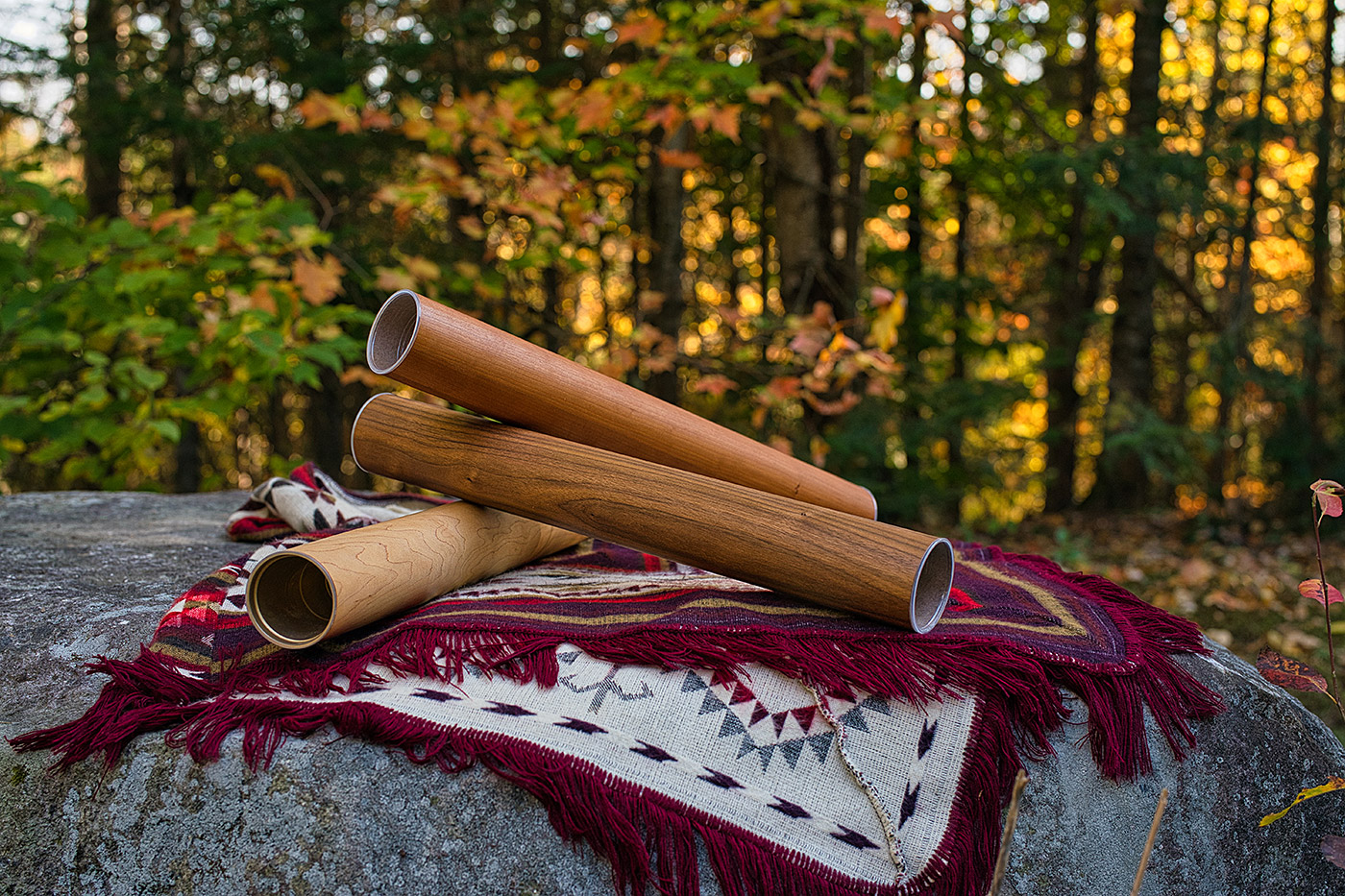
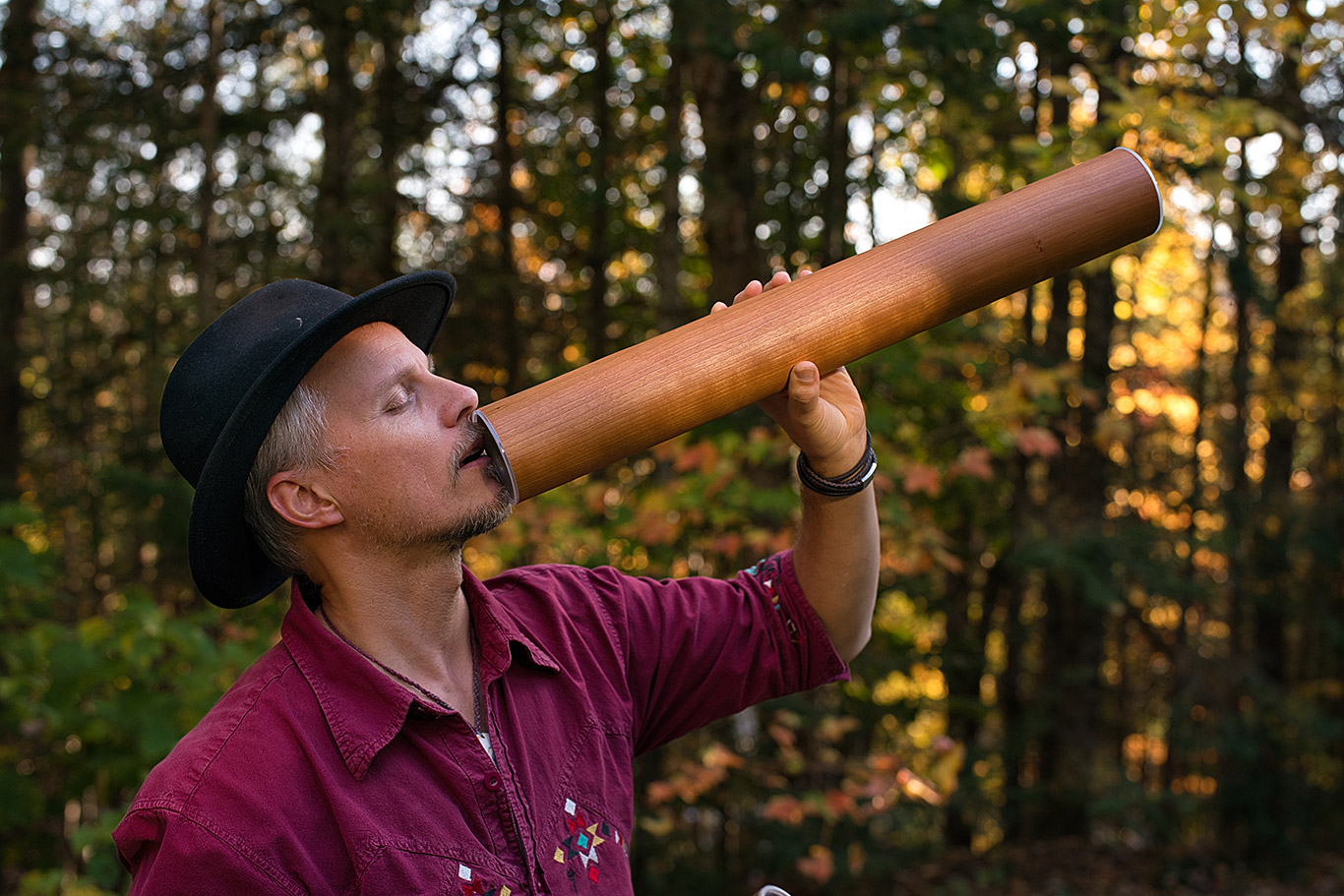
Yes! I am the only manufacturer of Celestiums in the world (as far as I know).
They are wonderful echo tubes that give a natural reverb effect to your voice, flutes, breath sounds, and… your drums!